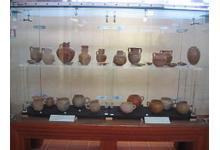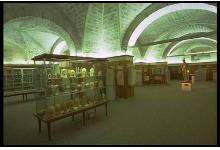

Complesso archeologico di Sant’Antioco - Sant'antioco (Carbonia-Iglesias)
Archaeological complex of Sant%u2019Antioco
Type:
Luoghi della cultura; Oggetto fisico
Category:
Archaeological areas; Archaeology museums
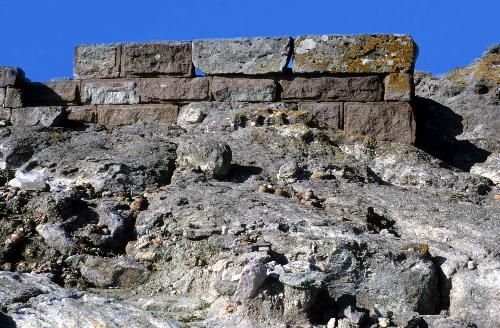
The ancient settlement of Sulky, called Sulci by the Romans, was founded by the Phoenicians in the 8th century BC (770-750 BC) where now is Sant%u2019Antioco, in one of the islands of the Arcipelago del Sulcis. This settlement was one of the most important Phoenician cities in the Mediterranean area, and even after the Carthaginian and Roman conquest it kept an important role dueto its port and the trade of mineral resources. The present city shows archaeological evidences from different cultures, as the Phoenician- Punic tofet and the Punic necropolis. The tofet (a special sanctuary- necropolis where the inhabitants of Phoenician and Punic cities of the western Mediterranean sea put babies born dead or who died shortly after being born) is set just outside the village, at the foot of a trachyte rock. Dating from the Punic age, it consists of a quadrangular enclosure built of trachyte blocks, including a smaller one which dates back to the Phoenician age; the entire tofet is delimited by a wide enclosure, built by the Carthaginians to protect the area.
A large number of urns with babies%u2019asheswere found in the crevices of the rock, often with stone stele. The Punic necropolis (beginning of the 5th- end of the 3rd century BC) is considered one of the most important in the Mediterranean area for extension and typology. It is formed by about 1500 tombs, mainly hypogeic chamber tombs preceded by a dromos (corridor) typical of the Punic period, and also burials in amphorae, reserved to children, and some graves covered with tufa slabs. During the Christian age (4th- 7th century AD) some of the hypogeic tombs were joinedopeningsome passages throughthe walls. These are the only catacombs in Sardinia.
Not accessible to disabled people.
Condizioni d'uso della risorsa digitale:

Quest'opera di MetsTeca è distribuita con Licenza Con attribuzione, no opere derivate, senza riuso commerciale.
Is referenced by:
consulta la scheda dell'Anagrafe Luoghi della Cultura
see website
Portale Sardo
Provider
Anagrafe Luoghi della CulturaIdentifier: mus_7197
Rights
License: Con attribuzione, no opere derivate, senza riuso commerciale