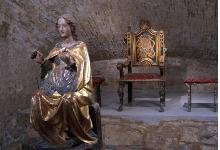

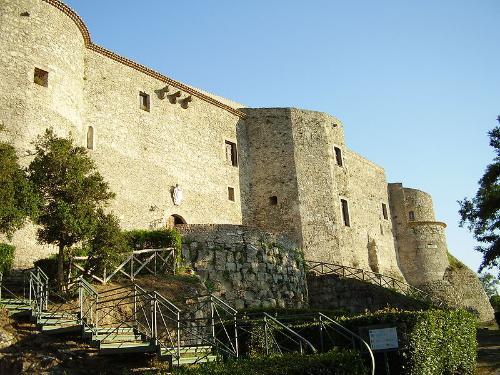
Castello Normanno Svevo
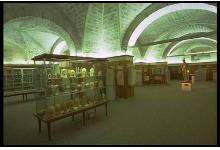
Museo archeologico nazionale "Vito Capialbi"
Type:
Luoghi della cultura; Ente/Istituzione
Category:
Archaeology museums
The Museum opened in the 1969 and named after Vito Capialbi (1790-1853), antiquarian erudite who first collected and preserved the testimonies of the life of the city, starting from the foundation of the Locrian colony of Hipponion to the constitution of the Roman colony of Valentia.
Originally founded in the ancient Gagliardi Palace, today the Museum is situated inside the Norman-Swabian Castle of the city after its restoration.
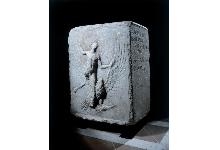
The exhibition displays archaeological finds coming from local excavations done in 1921 by Paolo Orsi, as well as finds from the prestigious collections of Capialbi, Cordopatri and Albanese.
The Museum's Collection shows the history of the territory, from the Prehistory age (in the first floor) to the Greek and Roman ages (Ground floor). The display is based on chronological and topography criteria, starting with finds from the excavations conducted in the sacred areas of the Magna Graecia city.
The sacred are of Scrimbia gave back Corinthian, Rodie and Attic ceramics, bronze helmets, votive statues and jewellery of excellent quality, such as earnings, rings, fibulas and brooches. In the same area they discovered architectonic fragments of a Doric temple from the 550 B.C.
Finds from the necropolis of Hipponion (end of VII — IV century B.C.) are exposed in the ground floor, among which stands out a golden foil attesting to the Orphic cult with an inscription in Doric-Ionic dialect which provides advice for the passage of the deceased in the world of the dead.
Continuing with the visit, we can appreciate Roman finds, remarkable statues of togats and Agrippa's marble head and some really sophisticated grave goods.
In the first floor we can explore the Capialbi Collection, with its assortment of coins among the most important in Calabria.
Finally, wide attention is dedicated to the underwater archaeology with the spectacular partial reconstruction of the keel of a boat with some amphorae and anchors of different ages found mostly in the Vibonese seabed.
Condizioni d'uso della risorsa digitale:

Quest'opera di MetsTeca è distribuita con Licenza Con attribuzione, no opere derivate, senza riuso commerciale.
View related digital collections
Is referenced by:
consulta la scheda dell'Anagrafe Luoghi della Cultura
see website
Museo archeologico nazionale Vibo Valentia - Carta della qualità dei
Provider
Anagrafe Luoghi della CulturaIdentifier: mus_293
Rights
License: Con attribuzione, no opere derivate, senza riuso commerciale