
MUNDA - Museo nazionale d'Abruzzo
Type:
Luoghi della cultura; Ente/Istituzione
Category:
Art museums
The museum that lived twice
The catastrophic earthquake of6th April, 2009 caused the closing of the National Museum of Abruzzo which had been the main museum of the region due to the historical relevance of its location dating back to the 16th century, the imposing “Castello Spagnolo”, a wonderful example of military architecture of that age. Thanks to its wide expositive surface and to the high quality of the collections, which testify to the history of the region from the early Quaternary Era until the 20th century , it was visited every year by a great number of tourists, pupils and art lovers. The historic location, seriously damaged by the earthquake is still under complex restoration works.
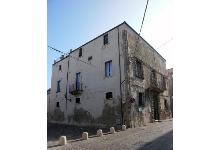
The new life of the museum started on 19th December 2015 when it reopened in a new location that is the former municipal slaughter house of L’Aquila in Borgo Rivera, in front of the famous “Fountain of the 99 spouts”.
History
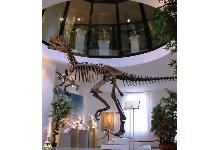
The National Museum of Abruzzo was opened on 23rd September 1951 in the 16th century Castle of L’Aquila, after restoration from the Nazi occupation. Both the collections from the Soprintendenza and the ones from the Civic museum of L’Aquila of the late 19th century, later dismantled in 1942 due to the war, were brought to the Castle. In 1958 the huge skeleton of a Mammuthus Meridionalis, found a few years before near L’Aquila, was exposed in the eastern bastion of the castle. In 1966, all the works of art from the Museum of the Sacred Art of the L’Aquila Diocese, opened in 1935, were “temporarily stored” for an indefinite period in the Castle. L’Aquila curia had already taken care of the artistic treasures of the town during the tragic months of the Second World War, moving them to the Vatican vaults as a preventive measure, away from bombings and depredations.
The objects belonging to the museum were dramatically taken away from their historical site following the earthquake of 6th April 2009 are today hosted in the former slaughter house of L’Aquila, built between 1881 and 1883 and closed in 1990. In the new temporary location, after restoration and repairs carried out between 2010 and 2015, a selection of 60 archeological finds and 112 paintings , sculptures and jewellery from the Middle Ages to the Modern Age, made safe by advanced anti-seismic protections, have been exposed. These masterpieces testify to the history and the vitality of this region and to its culture, some of them were found under the ruins of the earthquake, brought back to new life thanks to complex restoration works.
The treasures of MuNDA
Room A: dedicated to archeology with the remains from Amiternum, Aveia and Peltuinum important Italic and Roman cities of L’Aquila area: among them the Calendario Amiternino (about 20 AD) and the stone carvings representing a gladiators battle (1st century BC) and a funeral ceremony (1st century AD).
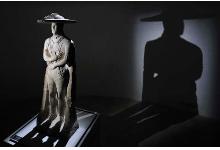
Room B: Abruzzo Medieval art is characterized first of all by a very precious collection of Madonne whose richness and artistic quality has few comparisons in the national and international field: some rare and precious icons of the 13th century (Madonna De Ambro, Madonna di Sivignano, Madonna di Montereale, Madonna del latte by Gentile da Roccamorice, the only one signed and dated 1283) and many wooden sculptures; majestic and sacred the ones of Romanesque- byzantine culture dating back to the 1100-1200 (Madonna di Lettopalena, Madonna delle Cocanelle); slender and graceful the ones dating back to the 14th century showing in their sweet faces and refined lines, all the spirituality and the grace of the new Gothic Art (Madonna di Fossa, Madonna di San Silvestro).
Room C (15th Century): The 15th century begins with dazzling paintings on pure gold background: among them the Trittico di Beffi (1410 - 1415), by the painter Leonardo di Sabino from Teramo. Proofs of the early Abruzzo Renaissance are the paintings by Andrea Delitio, and the wooden sculptures by Giovanni di Biasuccio and Silvestro dell’Aquila (San Sebastiano, 1478). Among the paintings of Franciscan theme and commission we find the polyptych representing San Giovanni da Capestrano and stories of his life by an unknown deeply cultured painter who also the painting representing San Francesco riceve le stimmate ( St. Francis receiving the stigmata) is attributed to.
Room E: in the 16th century the original personality of Saturnino Gatti stands out: he has been recently recognized as a leading artist of the Italian Renaissance. The museum exhibits two of his paintings (Madonna degli Angeli, 1505; Madonna del Rosario, 1511) and terracotta sculptures (Presepe di Tione and Sant’Antonio Abate, 1515) rescued from the earthquake and wonderfully restored.
Room F: the last room houses paintings by important Neapolitan 17th century artists, Mattia Preti , Bernardo Cavallino, Jusepe de Ribera, Andrea Vaccaro, Massimo Stanzione.

Condizioni d'uso della risorsa digitale:

Quest'opera di MetsTeca è distribuita con Licenza Con attribuzione, no opere derivate, senza riuso commerciale.
View related digital collections
Is referenced by:
consulta la scheda dell'Anagrafe Luoghi della Cultura
see website
MuNDA, interno, Sala B
MuNDA, esterno, Cortile est
MuNDA, Carta dei Servizi
Provider
Anagrafe Luoghi della CulturaIdentifier: mus_249
Rights
License: Con attribuzione, no opere derivate, senza riuso commerciale