
Type:
Luoghi della cultura; Ente/Istituzione
Category:
Museums
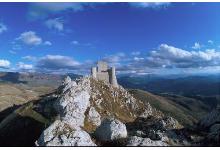
The “Rocca”: Albornoz Fortress The mighty and austere Rocca Albornoziana stands on the highest slope above Narni, looking toward the historical center below, the tight canyon dug by the Nera River and Via Flaminia. It is reachable either by walking Via del Monte, or by taking the road in the direction of Via Flaminia, and then turning to the left on Via Feronia. This significant example of 14th century military architecture is still well preserved. It was built between 1360 and 1370 by order of Cardinal Gil Alvarez Carrillo de Albornoz and designed by architects of fame, such as Ugolino da Montemarte and Matteo Gattapone. Its floor plan is squared, with four towers of which the tallest is the Keep. The two Gothic style portals are decorative elements, like the four Coat of Arms sculpted above the access door. Inside, there are fragmentized frescoes, including a Madonna and Child—dating from the 15th century—of Umbrian school and the Coat of Arms of Pope Urban IV. Cardinal Gil Alvarez Carrillo de Albornoz (Cuenca, 1299-Viterbo 1367), Papal Vicar and Legate, operated to restore and strengthen the papal authority and power all over the Papal State. He built castles and strongholds like the Rocca everywhere—often designing them himself—as a symbol of the power of the Church. The Rocca Maggiore and the Rocca Minore of Assisi, the Rocca of Spoleto, the Rocca of Todi and the Rocca of Orvieto are of the same period.

Condizioni d'uso della risorsa digitale:

Quest'opera di MetsTeca è distribuita con Licenza Con attribuzione, no opere derivate, senza riuso commerciale.
Is referenced by:
consulta la scheda dell'Anagrafe Luoghi della Cultura
Narni. Rocca Albornoz. XIV sec. seconda metà.
Corte interna. Maschio, pozzo e scalinata.
Narni. Rocca Albornoz. XIV sec. seconda metà.
Narni. Rocca Albornoz. XIV sec. seconda metà.
Narni. Rocca Albornoz. XIV sec. seconda metà.
Provider
Anagrafe Luoghi della CulturaIdentifier: mus_1554
Rights
License: Con attribuzione, no opere derivate, senza riuso commerciale