
Museo della città di Palazzo Trinci - Foligno (Perugia)
Type:
Luoghi della cultura; Ente/Istituzione
Category:
Museums
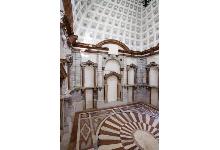
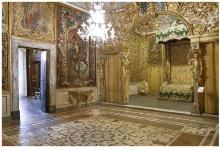
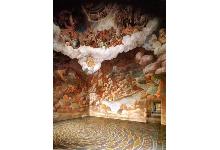
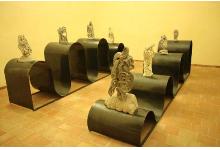
Museum of Palazzo Trinci The Museo di Palazzo Trinci is the town museum. Housed in Trinci Palace, it overlooks the old and former Piazza Grande, now Piazza della Repubblica that is the main square of Foligno. Palazzo Trinci was built between the 14th and 15th centuries as the residence of the noble Trinci family, who governed the town during the period spanning from 1305 to 1439. As a consequence of the annexing of Foligno to the Papal State, this palace became the seat of the papal legates up until the unification of the nation—the historical period referred to as the Unità d’Italia in 1860—and was later destined to host the offices of the Prefect, the Prefettura, then the Demanio—the Italian State Property Authority—the Monopoly of the State and the Guardia di Finanza—a body of police forces dedicated to financial crime. The building, damaged after a number of modifications on its structure during the centuries—including the damage from an earthquake in 1831-32 and also the World War II bombing of Foligno—was closed in 1985 and restored. In 1997, the palace was reopened to the public, and has been the Museum of the town since 2000. It hosts the new display of the Art Gallery and two sections of the Archaeological Museum. The noble palace of the Trinci deserves an attentive visit, both for the elegance of its external features and interior decorations and for the important art collections it hosts. In particular, the Art Gallery takes cares of the conservation of important works of artists who lived between the 14th and 16th century, such as Dono Doni, Bernardino di Mariotto, Giovanni di Corradinuccio, Pierantonio Mezzastris and Niccolò Alunno. Inside the building, it is above all worth noting the frescoed hall with the representation of The Liberal Arts and The Planets, which a recent discovery has attributed to the illustrious painter from the Marche region, Gentile da Fabriano, and the chapel decorated with Ottaviano Nelli frescoes depicting The Wedding of St Anna. The Museum’s exhibition pathway, organized on three floors starting from the Gothic Stairs, hosts the Archaeological Museum, the Art Gallery, the Museum of the History of the Communal Institution and the Multimedia Museum of Tournaments and Jousts. The Archaeological Museum has extensive documentation on the Umbrian autochthon populations of the Fulginates and the Plestini, as well as a collection of marbles, cinerary urns and sarcophaguses of Roman and Late Roman period. Other archaeological items, already part of the Trinci collection, are distributed around the frescoed rooms of the Museum, respecting the position in which they were originally placed. In the Art Gallery, whose origins date back to 1863, the works coming from the in town ecclesiastic buildings are collected, but above all there are the detached frescoes—removed with the intent of preserving them from destruction—which offer a more or less exhaustive cross-section of the local artistic production from the 14th to the 16th centuries. The section dedicated to the History of the Communal Institution collects accounts testifying the history of the Commune from the 15th century to the unification—19th century—of the Unità d’Italia. Meanwhile, the Multimedia Museum of the Tournaments and Jousts, inaugurated in 2001, is the point of referral for the research and study of the history of the popular games of the town from the Middle Ages up to today.

Condizioni d'uso della risorsa digitale:

Quest'opera di MetsTeca è distribuita con Licenza Con attribuzione, no opere derivate, senza riuso commerciale.
Is referenced by:
consulta la scheda dell'Anagrafe Luoghi della Cultura
see website
Sala espositiva, seconda sezione
Sala espositiva, seconda sezione
Sala espositiva, prima sezione
Veduta interna
Santa Maria in Campis
Niccolò di Liberatore detto l’Alunno, San Fra
Pierantonio Mezzastris, Affresco staccato con
Pierantonio Mezzastris Affresco staccato con
Bernardino di Mariotto, Madonna in trono col
Dono Doni, Affresco staccato con il Martirio
Giovanni di Corraduccio, Affresco staccato co
Cippo con iscrizione sacra, III-II secolo a.C
Ritratto marmoreo
Amore e psiche, metà del II secolo d. C.
Bronzetti votivi, VI-V secolo a C.
Busto di Livia
Frammento di sarcofago, III secolo d.C.
Epigrafe dei "marones", III secolo a.C.
Bassorilievo raffigurante Ermes con ariete, I
Iscrizione, III secolo d. C.
Iscrizione, 1733
Iscrizione, III secolo d. C.
Lastre pavimentali
Sarcofago con "Thiasos", III secolo d. C.
Bronzetto, Marte gradiente, V-IV secolo a. C.
Mosaici pavimentali, II secolo d. C.
Rilievo del circo, seconda metà del III secol
Sarcofago con scene circensi, fine del II sec
Statua di togato, prima metà del I secolo d.
Trapezoforo, seconda metà I secolo d.C.
Trapezoforo, seconda metà I secolo d.C.
Ritratto marmoreo
Ritratto marmoreo
Ritratto marmoreo
Ritratto marmoreo
Ritratto marmoreo
Ritratto marmoreo
Cippo con iscrizione
Frammento di sarcofago, III secolo d.C.
Iscrizione onoraria, prima metà III secolo d.
Stele con iscrizione
Ricostruzione di tomba
Urna tombale
Fibula bronzea
Palazzo Trinci, veduta esterna
Provider
Anagrafe Luoghi della CulturaIdentifier: mus_1481
Rights
License: Con attribuzione, no opere derivate, senza riuso commerciale