
Museo archeologico nazionale di Napoli
Type:
Luoghi della cultura; Ente/Istituzione
Category:
Archaeology museums
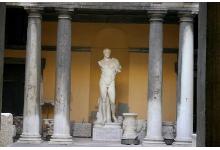
With its rich and unique archaeological collections, this is one of the most ancient and important museums in the world. Its creation is closely tied to the figure of Charles III of the Bourbon dynasty who ascended to the throne of Naples in 1734. He promoted on the one hand the excavations of the Roman towns buried by the eruption of 79 AD and on the other the project of setting up a Museo Farnesiano, moving to Naples part of the rich collection he had inherited through his mother Elisabeth Farnese. It was his son Ferdinand IV who chose the current building to house both the Farnese collection and the relics from the Vesuvian towns, which are still today the Museum’s core collections. The palace, erected as royal cavalry barracks at the end of the 16th century, became the seat of the University of Naples from 1616 to 1777, when it was enlarged and refurbished by the architects Fuga and Schiantarelli. The first galleries were set up during the French Decade (1806-1815) and with the Restoration of the Bourbons in 1816, it became the Real Museo Borbonico. Initially conceived as an encyclopedic museum, it included different Institutes and laboratories (Royal Library, Drawing Academy, Officina dei Papiri and an astronomical Observatory never to be completed), which were all moved to other locations at different times. After the unification of Italy in 1860, it became the National Museum. Its collections were gradually expanded through the acquisition of finds from excavations in Campania and Southern Italy, as well as from private collections. The transfer of all the paintings to the Museum of Capodimonte in 1957, determined its sole identity of Archaeological Museum. With its rich and unique archaeological collections, this is one of the most ancient and important museums in the world. Its creation is closely tied to the figure of Charles III of the Bourbon dynasty who ascended to the throne of Naples in 1734. He promoted on the one hand the excavations of the Roman towns buried by the eruption of 79 AD and on the other the project of setting up a Museo Farnesiano, moving to Naples part of the rich collection he had inherited through his mother Elisabeth Farnese. It was his son Ferdinand IV who chose the current building to house both the Farnese collection and the relics from the Vesuvian towns, which are still today the Museum’s core collections. The palace, erected as royal cavalry barracks at the end of the 16th century, became the seat of the University of Naples from 1616 to 1777, when it was enlarged and refurbished by the architects Fuga and Schiantarelli. The first galleries were set up during the French Decade (1806-1815) and with the Restoration of the Bourbons in 1816, it became the Real Museo Borbonico. Initially conceived as an encyclopedic museum, it included different Institutes and laboratories (Royal Library, Drawing Academy, Officina dei Papiri and an astronomical Observatory never to be completed), which were all moved to other locations at different times. After the unification of Italy in 1860, it became the National Museum. Its collections were gradually expanded through the acquisition of finds from excavations in Campania and Southern Italy, as well as from private collections. The transfer of all the paintings to the Museum of Capodimonte in 1957, determined its sole identity of Archaeological Museum.

Condizioni d'uso della risorsa digitale:

Quest'opera di MetsTeca è distribuita con Licenza Con attribuzione, no opere derivate, senza riuso commerciale.
View related digital collections
Is referenced by:
consulta la scheda dell'Anagrafe Luoghi della Cultura
see website
Museo archeologico - atrio
Museo archeologico - salone
Museo archeologico - scala
Certificato Herity
Provider
Anagrafe Luoghi della CulturaIdentifier: mus_323
Rights
License: Con attribuzione, no opere derivate, senza riuso commerciale